Continuing Care
Recovery does not end when residential treatment is complete. In many ways, leaving treatment is the beginning of the next chapter.
At Palmetto, continuing care is about helping clients carry what they have learned into daily life. During treatment, clients begin building new habits, new insight, healthier relationships, and a clearer understanding of what recovery can look like. Continuing care helps connect those early changes to the people, places, and supports that can help recovery continue after leaving Palmetto.
Our goal is for clients to leave with more than a discharge plan. We want them to leave with direction, connection, and a realistic path forward.

Building a Life After Treatment
Residential treatment gives clients time to step away from old patterns and begin seeing life differently. As addiction, trauma, family pain, and unhealthy coping patterns are addressed, many clients begin to reconnect with parts of themselves that may have been hidden, protected, or pushed aside for a long time.
Continuing care helps clients build on that progress. Before discharge, Palmetto works with each client to think through what life may look like after treatment — where they will live, who they will spend time with, what support they will need, what risks they may face, and what kind of recovery community can help them continue growing.
The goal is not simply to avoid relapse. The goal is to help clients keep moving toward a healthier, fuller, and more connected life.
Honoring What Is Already Healthy
Treatment is not about taking everything away from a person or asking them to become someone entirely different. Many clients arrive at Palmetto with strengths, values, relationships, talents, faith, work ethic, humor, intelligence, compassion, and dreams that are still very much alive.
Recovery is about identifying what no longer serves the client — the patterns, behaviors, defenses, relationships, and coping strategies that may have kept addiction active — while honoring and strengthening what is already healthy.
At Palmetto, we want clients to leave with more of themselves, not less. As the weight of addiction, shame, fear, and old survival patterns begins to loosen, clients can begin building on the parts of themselves that are honest, capable, connected, and ready for growth.
Connection After Palmetto
Recovery is deeply connected to community. Many clients leave treatment with relationships, lessons, and experiences that continue to matter long after they return home.
For some, the next step may include outpatient counseling, intensive outpatient programming, psychiatric care, recovery meetings, alumni connection, spiritual support, peer relationships, or other recovery-centered communities. For others, it may also include professional monitoring, family therapy, or continued coordination with approved providers.
Palmetto helps clients explore these options so they are not leaving treatment alone or without direction.
Step-Down Care and Outpatient Support
For many clients, continuing care includes stepping down into another level of support after residential treatment. This may include outpatient therapy, intensive outpatient programming, psychiatric care, recovery meetings, or other services in the client’s home community.
Palmetto works with providers and programs in Louisiana and across the country to help clients connect with appropriate resources when returning home. When possible, our team helps identify options that fit the client’s clinical needs, location, schedule, family situation, professional responsibilities, and recovery goals.
Support for Professionals and Monitoring Requirements
Some clients come to Palmetto with professional, legal, employment, or monitoring-related obligations. This may include physicians, nurses, attorneys, pilots, executives, safety-sensitive workers, or other licensed professionals.
When properly authorized, Palmetto can coordinate with professional health programs, licensing boards, employers, attorneys, monitoring agencies, outpatient providers, and other approved parties to support the transition after treatment.
Because requirements vary by state, profession, employer, and monitoring entity, our team works to understand what is needed and help clients prepare for the expectations they may face after treatment.
Family Involvement After Treatment
Families are often an important part of life after treatment. When appropriate and authorized by the client, Palmetto may involve family members in continuing care planning.
This may include guidance around communication, boundaries, relapse prevention, home environment, outpatient support, family therapy, Al-Anon or other family recovery resources, and expectations for life after residential treatment.
The goal is not to make families responsible for another person’s recovery. The goal is to help loved ones understand how to support recovery in a healthier and more informed way.
Alumni and Ongoing Connection
Many clients benefit from staying connected to people who understand the recovery journey. Alumni involvement, recovery meetings, sponsor relationships, peer connection, and other recovery communities can provide encouragement, accountability, and a reminder that life after treatment does not have to be faced alone.
Recovery is not only about what a person leaves behind. It is also about what they begin building — healthier relationships, clearer purpose, new routines, honest connection, and a life that feels worth protecting.
Continuing care at Palmetto may include:
- Individualized discharge planning
- Referrals to outpatient counseling or psychiatric care when appropriate
- Referrals to intensive outpatient programming or step-down care
- Recovery meeting and community support recommendations
- Relapse prevention planning
- Coordination with family members when authorized
- Coordination with professional boards, employers, attorneys, or monitoring programs when properly authorized
- Planning around work, family, travel, and home environment
- Alumni connection and ongoing recovery support
- Recommendations for continued therapy, recovery support, and accountability
A Path Forward
Continuing care should be realistic, personal, and usable. It should account for the client’s life, responsibilities, location, relationships, risks, and hopes for the future.
Palmetto’s goal is to help clients leave treatment with a plan that feels clear, practical, and connected to real support. Residential treatment can help build the foundation, but recovery continues through daily choices, honest relationships, meaningful connection, and a willingness to keep growing.
IOP Focus
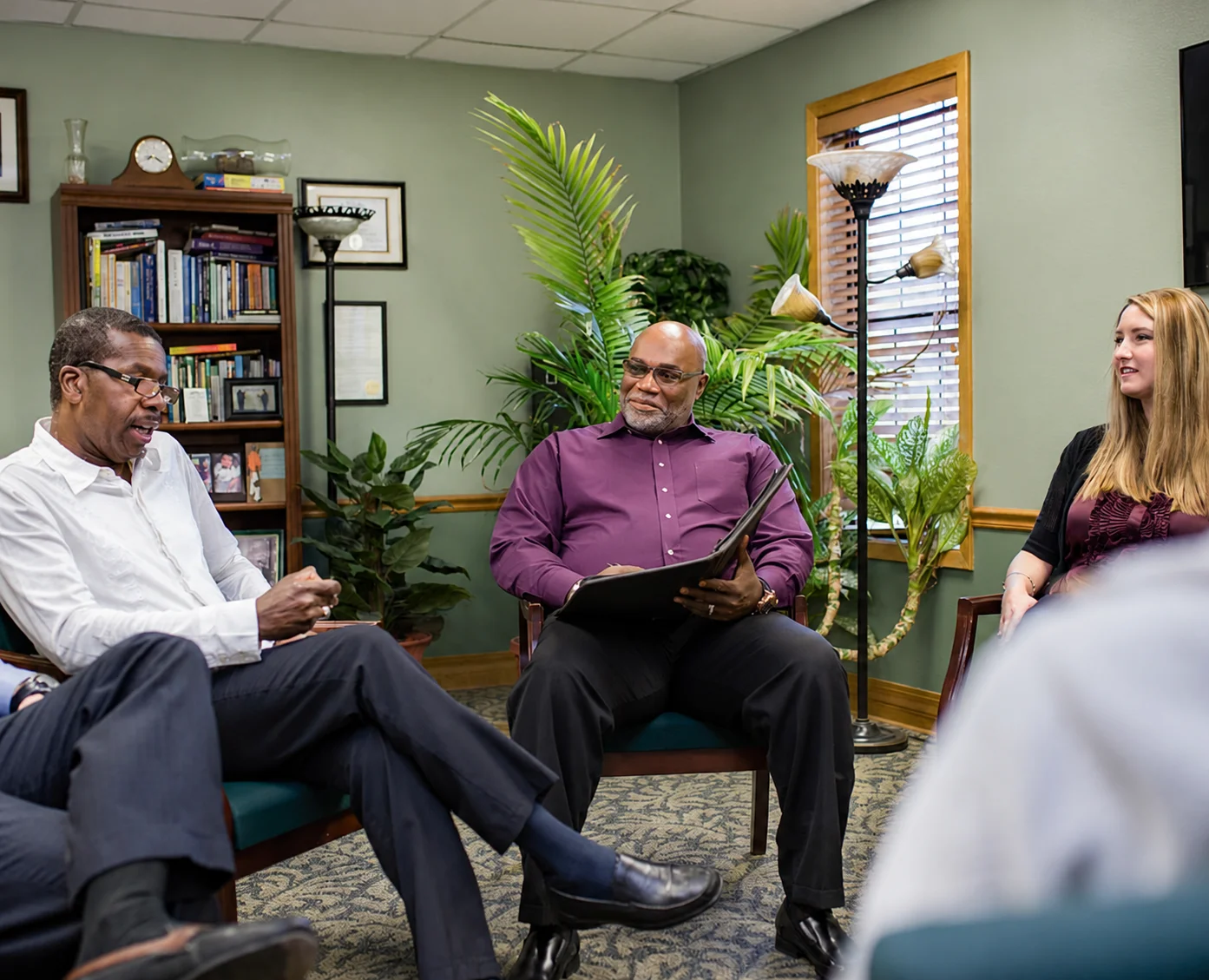
The Intensive Outpatient Program for Chemical Dependency provides treatment for clients with substance abuse problems or a combination of substance abuse and co-occurring psychological disorders. The Outpatient Program is a primary or transitional treatment modality following a residential stay. The patient’s counselor and physician assess the patient’s individual needs to determine the program’s length. Palmetto currently has six locations throughout Louisiana offering this program. All sites offer no-cost assessments.
Clients participate in the treatment program three evenings a week, allowing them to maintain their employment or educational status and live at home while receiving the vital help they need. The program includes educating clients on the disease concept and determining their stage of abuse/ addiction; identifying psychosocial stressors that lead to substance abuse; treating the addiction following the 12-step model; providing drug and alcohol education; and providing relapse prevention education.
PHP Focus
Our partial hospitalization program is for residents who will benefit from day visits, but are healthy enough to not need a full on-site stay for days or weeks at a time. The strategy mirrors residential schedules without requiring the patient to be on-site full time, having flexibility in the timing of each patient’s presence in our facilities. On average, patients will spend about 6 days in this program, although we can adjust the timing on a case-by-case basis.
Our Process
Step 1
Reach Out
The first step is a conversation. You do not have to know exactly what you need before you call. Tell us what is going on, what concerns you have, and what questions need to be answered. Not ready to call, just submit an application.
Step 2
Talk Through the Situation
Our admissions team will listen and help gather the information needed to understand the situation. This may include substance use concerns, medical or detox needs, mental health history, previous treatment, family or professional concerns, insurance benefits, and timing.
Step 3
Determine the Next Step
Palmetto does not believe every person needs the same path. Depending on the situation, the next step may include medical detox, residential treatment, a 1-day or 3-day evaluation, or another level of care. If Palmetto is not the appropriate fit, we will help you understand that as clearly as we can.
FAQs
What is continuing care?
Continuing care is the planning and support that helps clients transition from residential treatment back into daily life. It may include outpatient therapy, intensive outpatient programming, psychiatric care, recovery meetings, family support, alumni connection, monitoring requirements, and other recovery resources.
When does continuing care planning begin?
Continuing care planning begins before discharge. Palmetto works with each client during treatment to understand their needs, risks, goals, home environment, family situation, professional responsibilities, and available supports so the next step feels realistic and usable.
Why is continuing care important?
Residential treatment can help clients build a strong foundation, but recovery continues after they leave Palmetto. Continuing care helps clients carry what they have learned into daily life through connection, accountability, ongoing support, and a realistic plan for what comes next.
Does Palmetto help arrange outpatient care or IOP after treatment?
Yes. When appropriate, Palmetto can help clients connect with outpatient counseling, intensive outpatient programs, psychiatric care, recovery supports, and other providers in Louisiana or across the country.
What if I live out of state?
Palmetto works with clients and referral sources from across the country. When possible, our team helps identify continuing care options near the client’s home or in the community where they plan to continue recovery.
Does Palmetto help with professional monitoring requirements?
Yes, when properly authorized. Palmetto can coordinate with professional health programs, licensing boards, employers, attorneys, monitoring agencies, outpatient providers, or other approved parties to support the transition after treatment.
Is continuing care the same for every client?
No. Continuing care should be individualized. Recommendations may vary based on clinical needs, treatment progress, relapse risks, family situation, location, work responsibilities, professional obligations, and recovery goals.
Is family involved in continuing care planning?
Family may be involved when clinically appropriate and authorized by the client. This can help loved ones understand boundaries, communication, relapse prevention, home environment, and the type of support that may be helpful after treatment.
Does Palmetto offer alumni support?
Palmetto encourages alumni connection and ongoing recovery support after discharge. Alumni involvement, recovery meetings, peer relationships, and other recovery-centered communities can help clients stay connected and supported after treatment.
What if a client does not follow the continuing care plan?
Continuing care recommendations are designed to support recovery, but each client must choose to follow through. If someone struggles after treatment, it may be important to reconnect with recovery supports, outpatient providers, family resources, or a higher level of care if needed.
What is the goal of continuing care?
The goal is to help clients leave treatment with direction, connection, and a realistic path forward. Continuing care is not just about avoiding relapse; it is about helping clients continue building a healthier, fuller, and more connected life.
Don’t See Your Question? Contact Us Below.
All submissions will remain confidential.